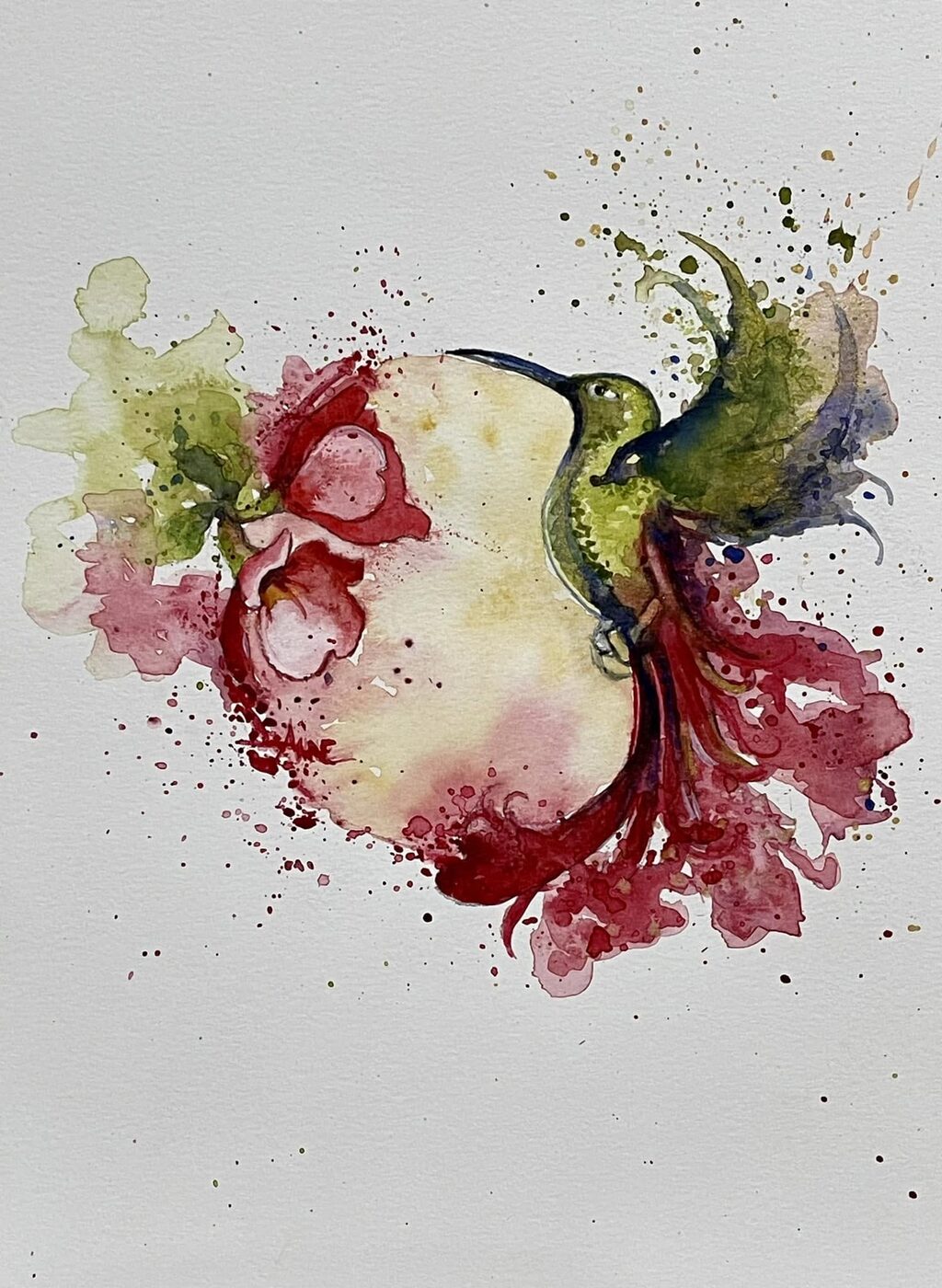
Where the wing ends and the splash begins was the paint’s decision.
Watercolor goes where it wants.I’ve learned to follow it.
Flowers, birds and bees. There’s no deep reason for it. They’re just what I love.
Where the wing ends and the splash begins was the paint’s decision.
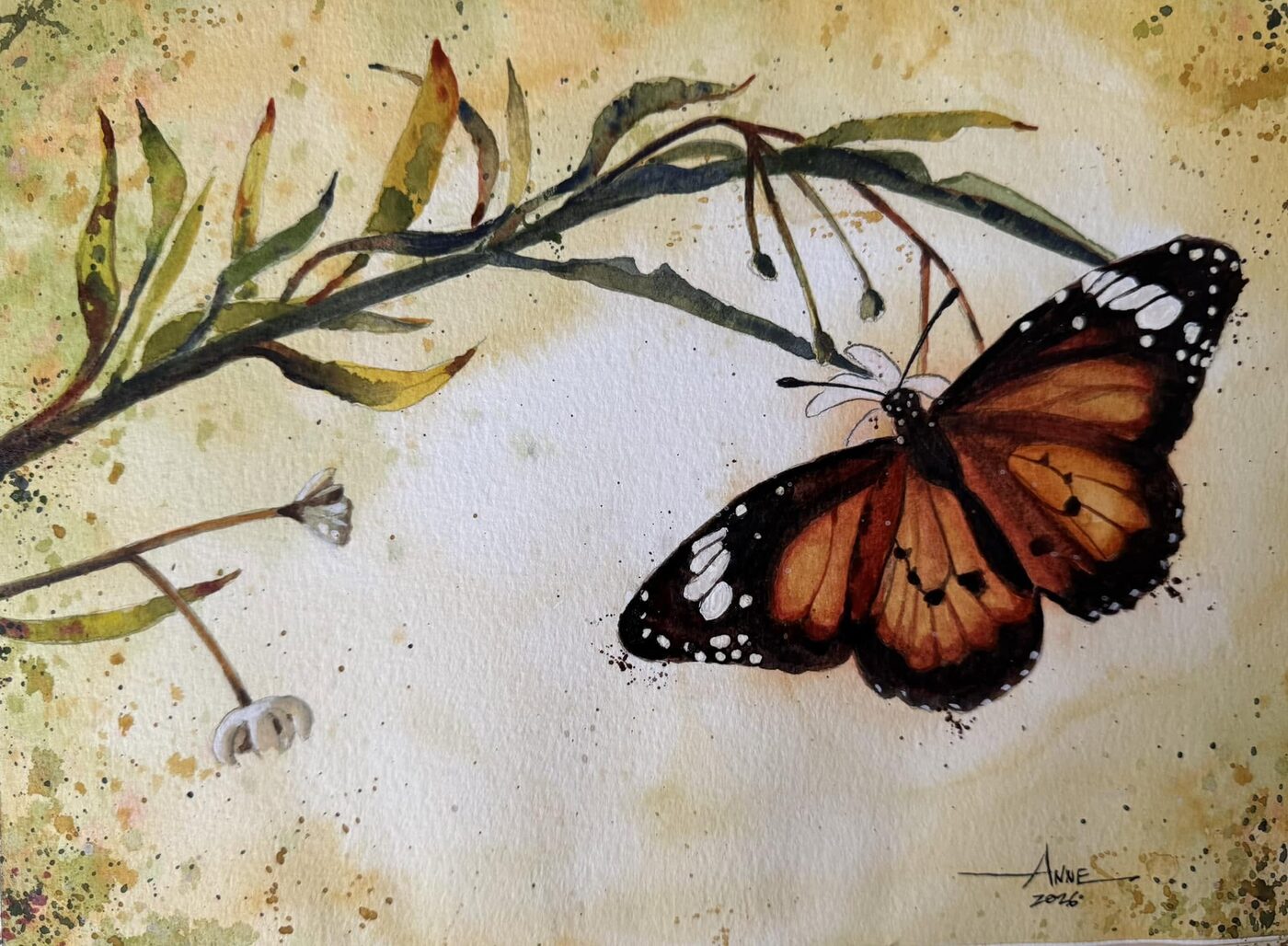
Three colors from the wheel, and staying with them.
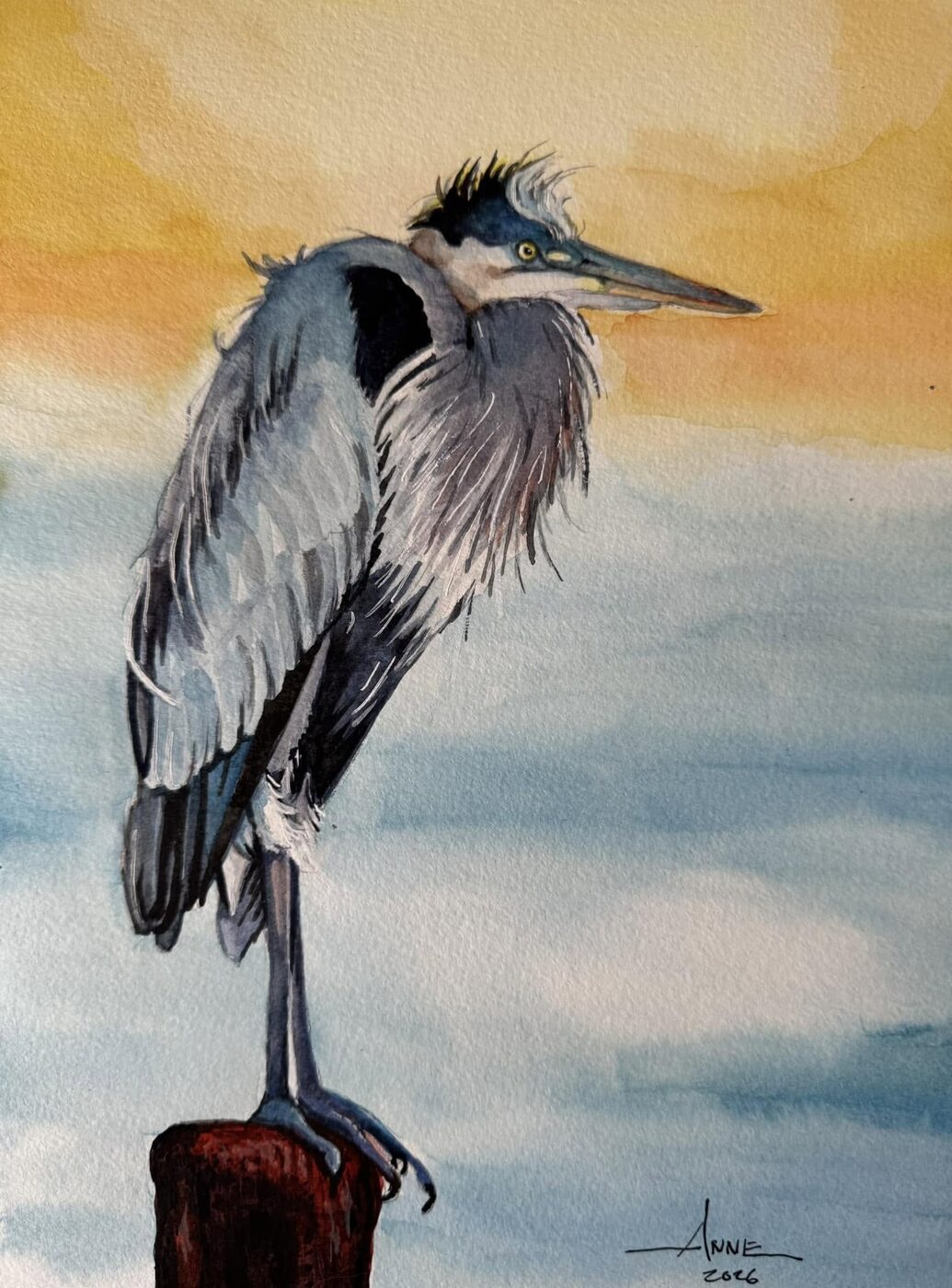
Warm sky, cool water — near-complements, holding each other in place.
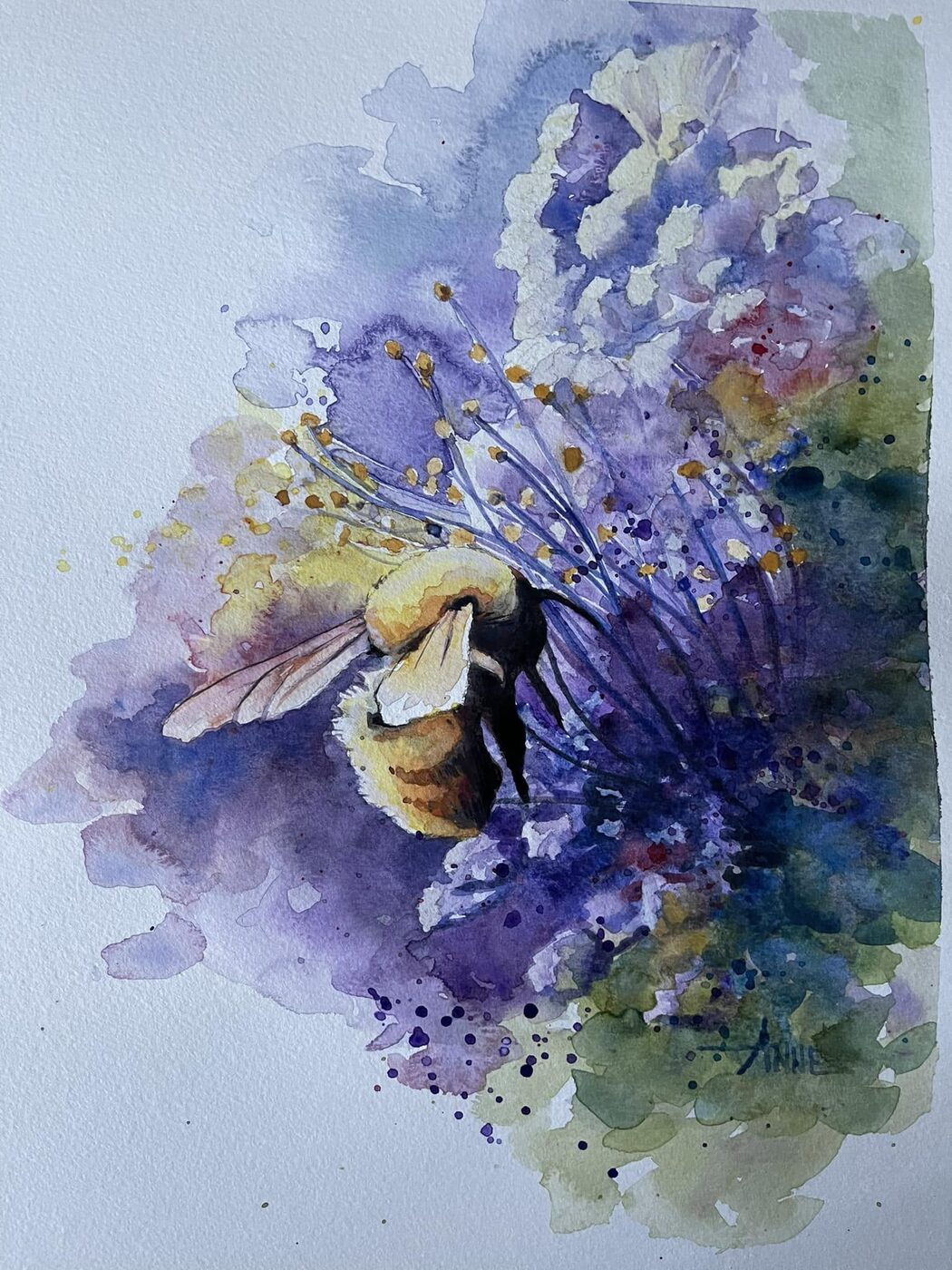
The pooling is the point. You put it down and it moves.
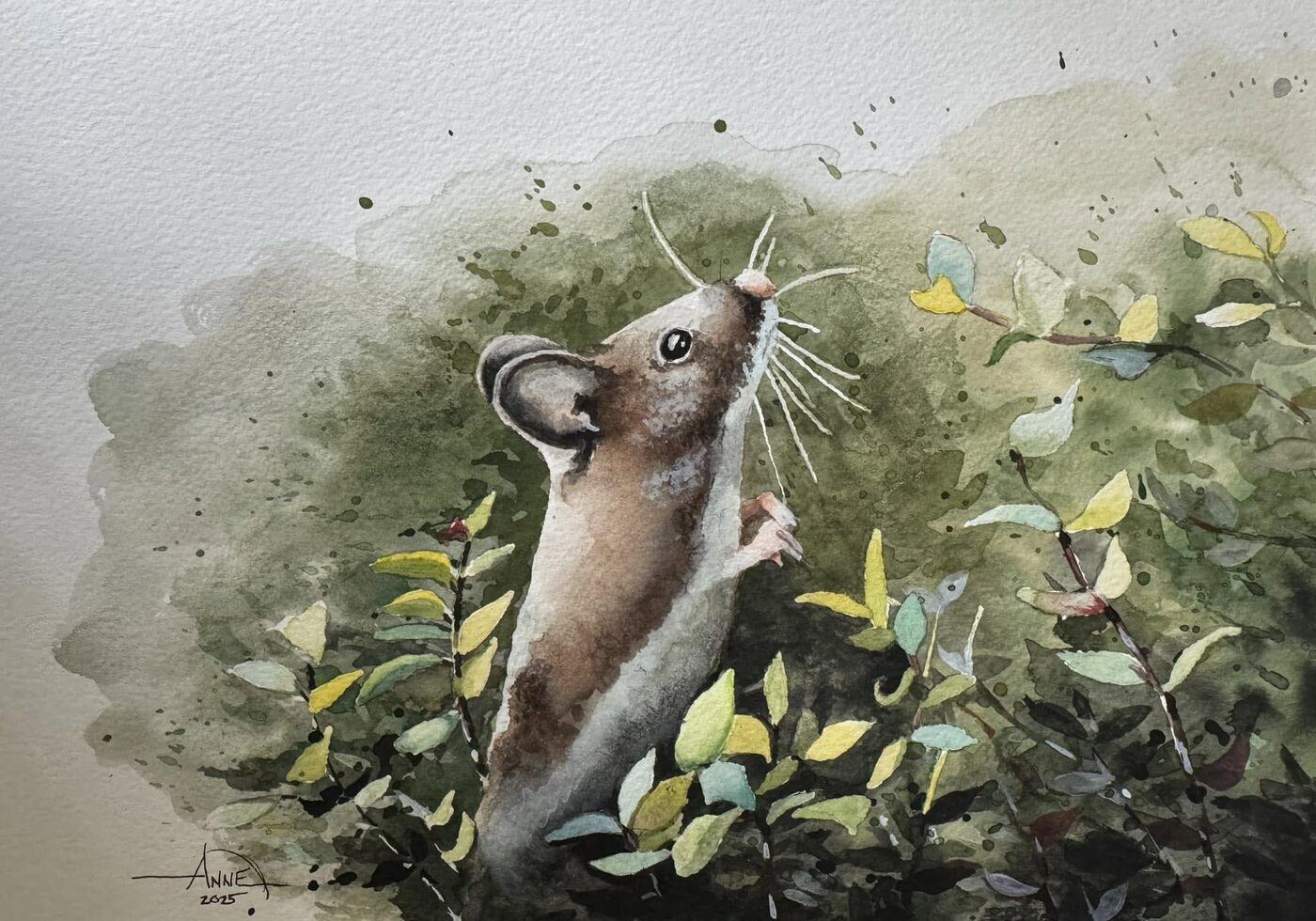
Painted in the late-afternoon hour, when the sun lands across the table.
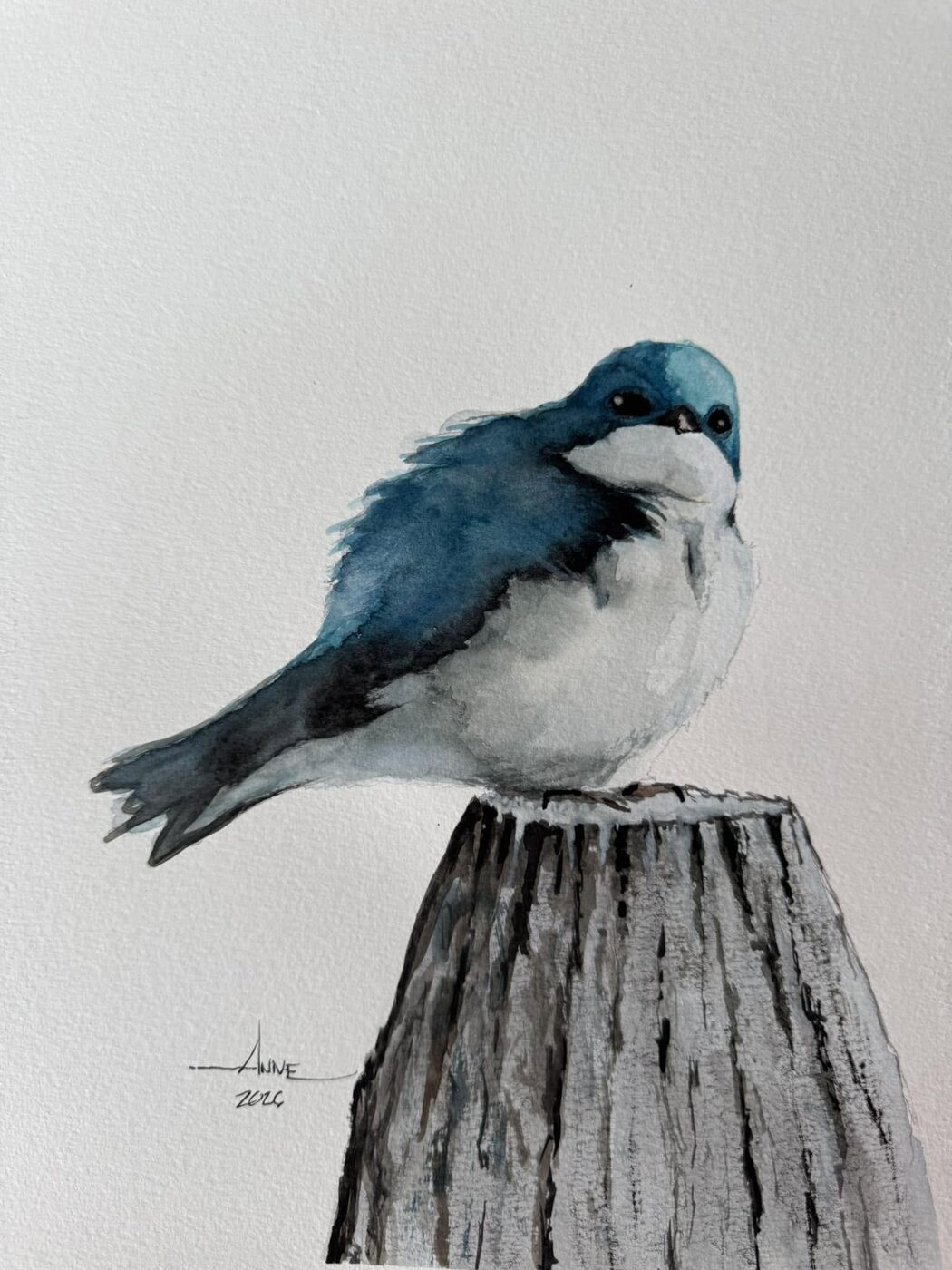
Left unfinished at the edges, where the paper gets to speak.
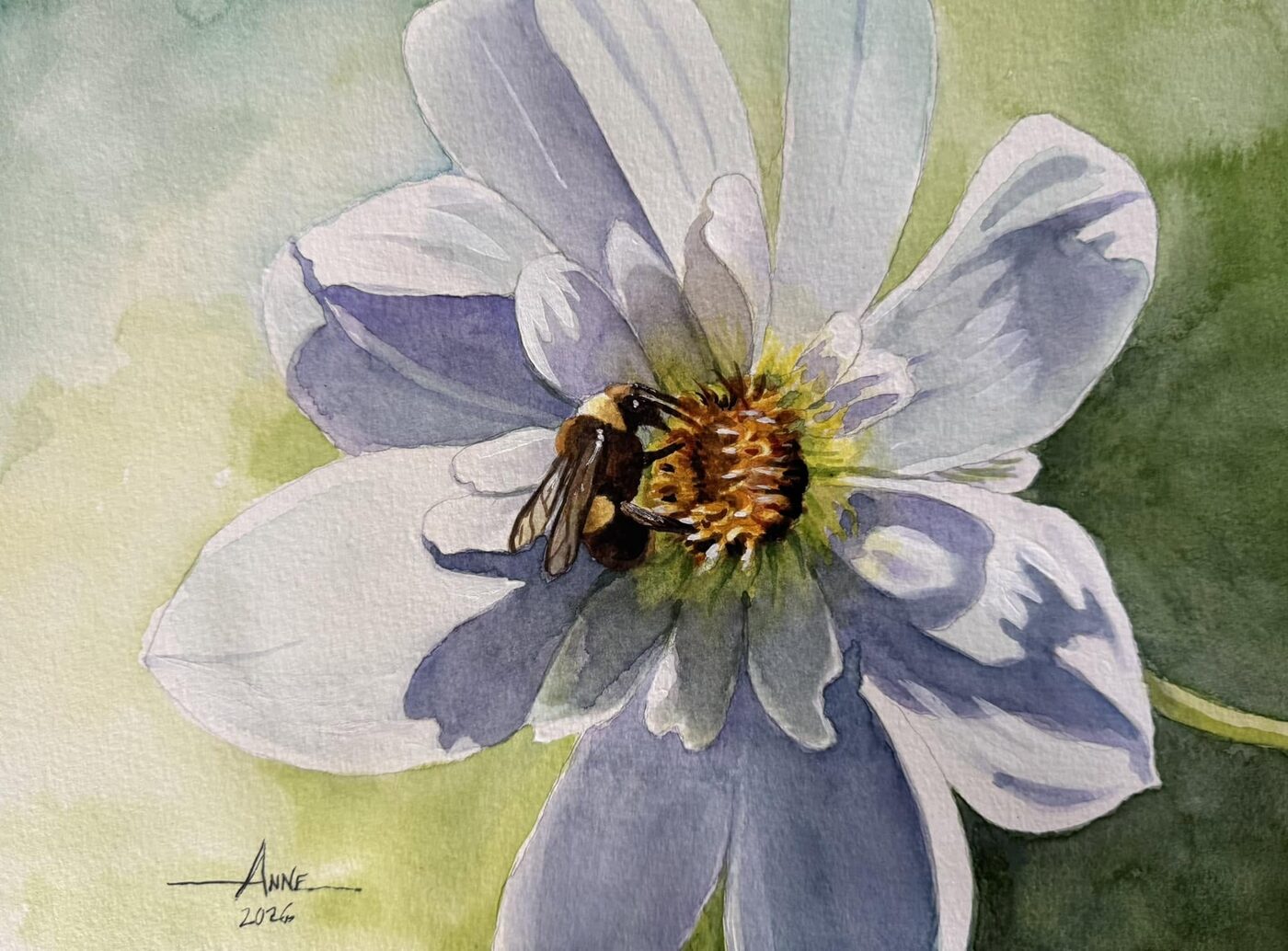
Shadow is where complementary colors do their quiet work.
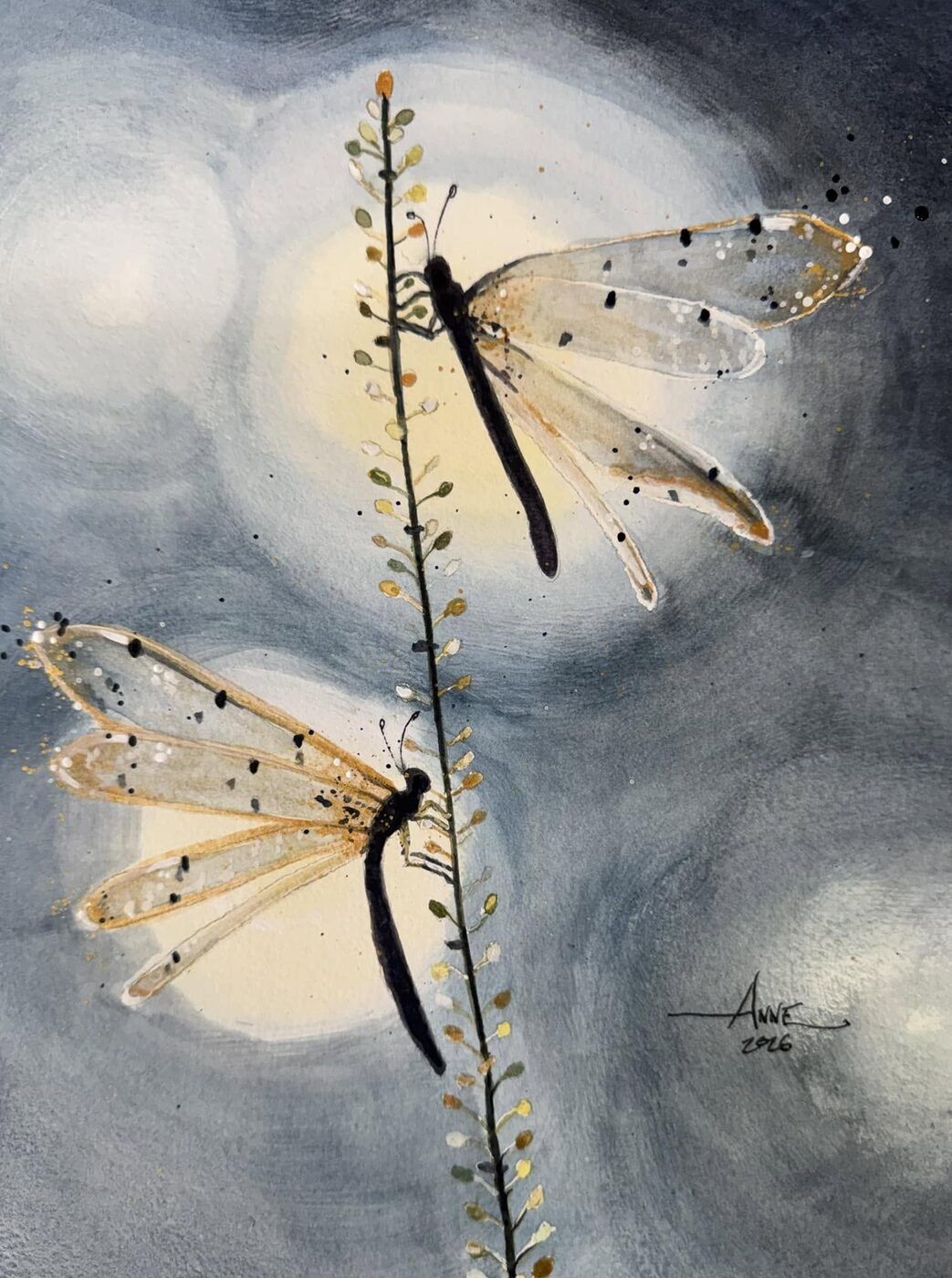
Movement at the edges. Stillness in the middle.
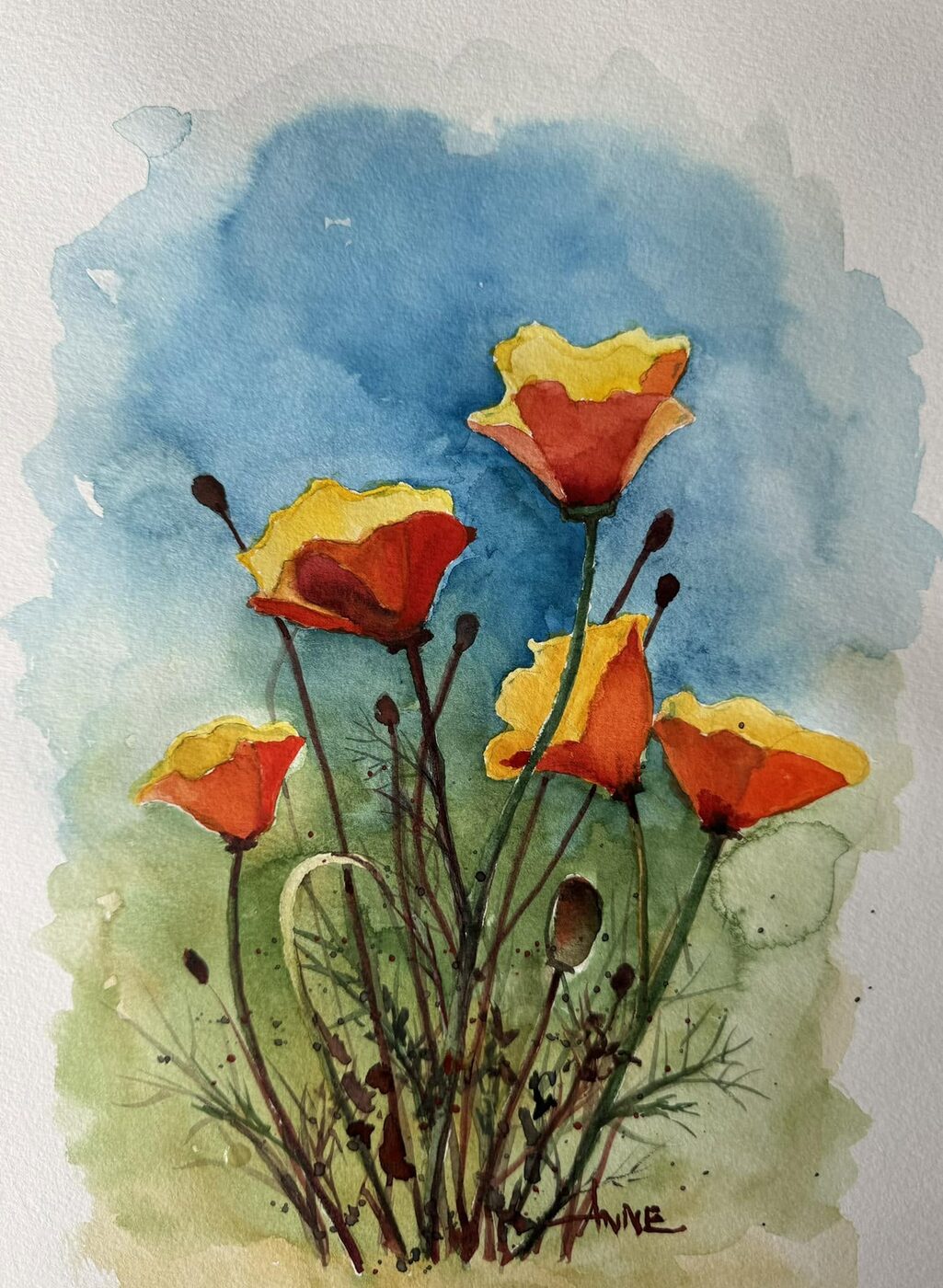
One of nearly a thousand. Most weren’t good. That was the whole point.
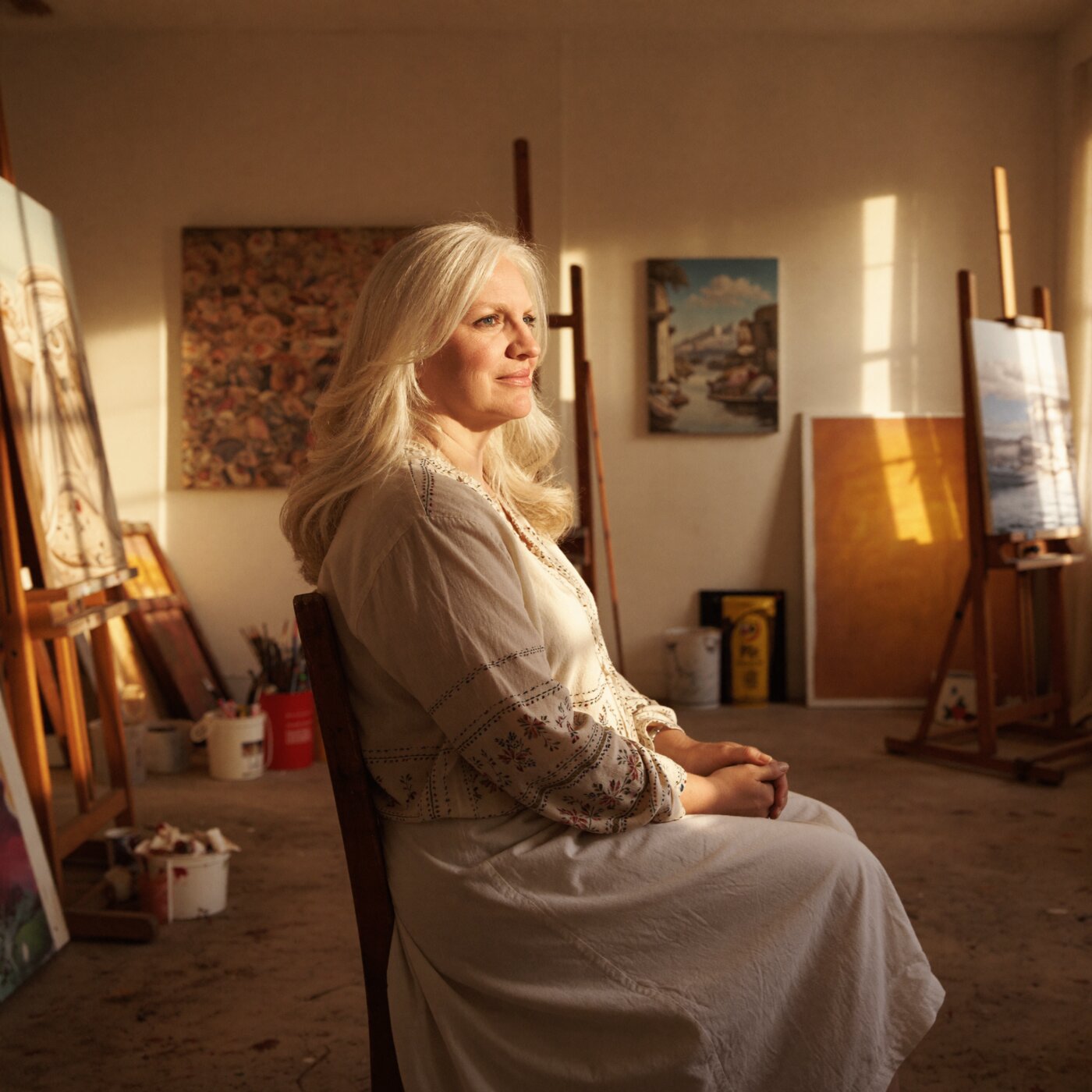
For a long time I was afraid of watercolor.
I’m a traditional artist and I’ve worked in most mediums, but color was the thing I never really understood, so I mostly stayed away from it. Watercolor was the worst of it. It does its own thing. You put it down and it moves, it pools where it wants, it dries lighter than you thought it would. I couldn’t control it, and that scared me, so I avoided it.
Then in 2017 I came across a story about a ceramics teacher who split his class in two. One half would be graded purely on quantity — on the last day he’d bring in his bathroom scales and weigh what they’d made. Fifty pounds of pots earned an A. The other half were graded purely on quality, and only had to produce a single pot, as long as it was perfect.
When he graded them, every one of the best pots came from the group being weighed. They’d spent the semester making things and learning from what went wrong. The other group had spent it theorizing about the perfect pot.
So I decided to paint a watercolor every day, and I gave myself permission for them to be bad.
I didn’t manage every day. Some weeks it was four, some weeks none at all. But over about eight years it added up to something close to a thousand paintings, and most of them weren’t good. That turned out to be the whole point. You can’t learn color by reading about it. I learned it by mixing it wrong for years, until one day I was mixing it right.
What helped most was limiting myself. I’d pick three colors from the wheel and stay with them. And because watercolor runs and blends on its own while you’re still working, I started to actually see what complementary colors do to each other — how they behave in a shadow, where they make something sit back, where they bring it forward. Nobody taught me that. The paint did.
The thing I’d been afraid of turned out to be the best thing about it. Watercolor doing its own thing isn’t a problem to be managed. It’s the magic. Once I stopped trying to hold it still and started experimenting, it clicked.
I paint in my studio, most days from morning until the light goes. My favorite hour is late afternoon, when the sun comes through the window and lands across the table.
I paint flowers, birds and bees. There’s no deep reason for it. They’re just what I love.
The ceramics story is from Art & Fear by David Bayles and Ted Orland.
If a painting should exist and doesn’t yet, write to me.
Write to Anne
© Anne Derrick Studios · All paintings original watercolor